
Measured product lead custody receipt.
github.com/Zer0pa/Bio-Molecular-ExplorerRESEARCH-READY
LIVE
H100 VALIDATION OPEN
Cardiac and Molecular Research In-Silico
Bio-Molecular-Explorer · PyPI zer0pa-biomolecular-explorer v0.1.0 · github.com/Zer0pa/Bio-Molecular-Explorer
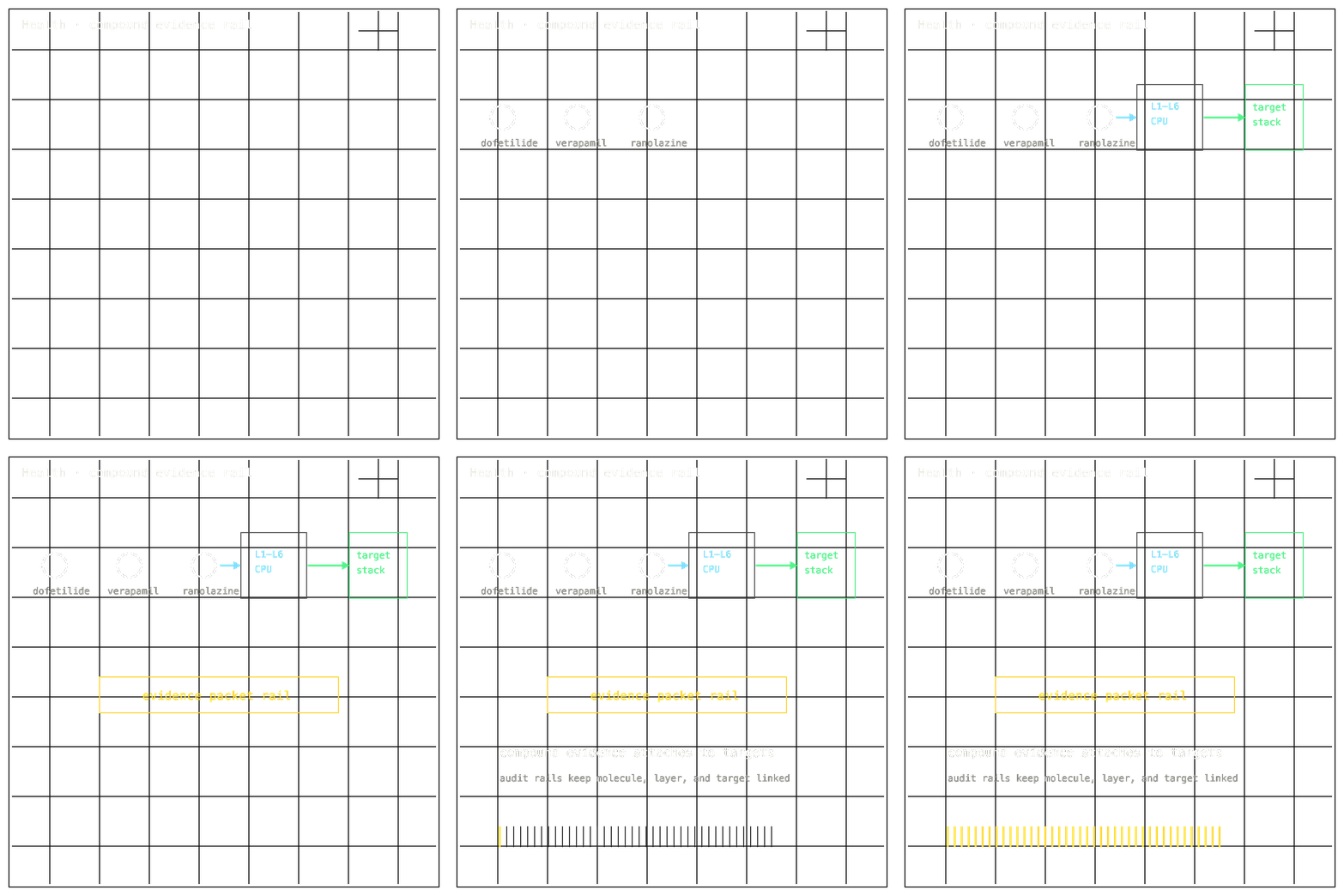
A CPU research lane for cardiac and CiPA work. Three reference compounds — dofetilide, verapamil, ranolazine — travel through a six-stage L1–L6 stack from chemistry to a router/reasoner so molecular inputs, ion-channel framing, and stage history stay together for the researcher.
768 CPU tests pass and 9 seed compounds run end-to-end as stubs; H100/L6 cardiac validation and blind PubMed scoring have not been run. No clinical, diagnostic, or regulatory result is presented.
01 · THE GAPCONTEXT DRIFTS
“Cardiac/CiPA research needs molecular inputs and ion-channel context. result history belongs in one place.”
02 · MARKETSUSER FIT
Best fit: computational cardiac-safety researchers running CiPA-style methods; not a clinical, diagnostic, regulatory, or drug-safety product.
03 · VALUE
L1–L6BME
A six-stage CPU research stack · chemistry through router/reasoner, bounded to research context, not a clinical system.
04 · INSIGHT
768 CPU tests pass; H100 validation remains pending.
05.0 · CURRENT TECHFRAGMENTED CARDIAC EVIDENCE
Cardiac-safety research today lives across molecular modeling tools, hERG and CiPA assays, literature notes, and lab spreadsheets. Each system can be strong, but the inputs, intermediate context, and stage history travel separately and meet only inside a researcher's head.
05.1 · OUR TECHL1–L6 RESEARCH ROUTE
A CPU-side six-stage L1–L6 route — chemistry, dissolution, target binding (KCNH2, SCN5A, KCNQ1, CACNA1C under CiPA framing), cellular cardiac, CiPA morphology, router/reasoner — keeps molecular records, ion-channel context, and stage state together for the researcher. 768/768 CPU tests pass and the 9-compound CiPA seed wedge runs end-to-end as stubs; H100/L6 cardiac validation is still ahead.
05.2 · BENCHMARKSCPU · PRE-H100
CPU tests768pass
Seed run9/9stub-state compounds
LayersL1–L6research route
PyPIv0.1.0connected; stale text
Open work: CPU stub-state PASS · H100/L6 validation and blind PubMed scientific-correctness scoring NOT RUN.
06 · MEASUREMENTL6 VALIDATION PATH
Molecular completeness and ion-channel coverage; blind test scoring.
06.1 · BOUNDED VALIDATION · CARDIAC REVIEW PATH
2026-05-08 CPU L1–L6 stub state with the dofetilide / verapamil / ranolazine seed wedge. WP0 H100/L6 cardiac validation and blind PubMed scoring are NOT RUN; clinical and regulatory work stays out of scope.
07 · KEY METRICSBIO-MOLECULAR EXPLORER CPU RUN 2026-05-08
07.1 · CPU TEST SURFACE
768/768
Tests passing · unit, integration, and runpod-sim layers
07.2 · CARDIAC SEED RUN
9/9
CiPA wedge · stub-state seed run, not validation
07.3 · RESEARCH LAYERS
6/L1–L6
Research stack · chemistry through router/reasoner
07.4 · PYPI RELEASE
v0.1.0
Connected · long description still stale on package index
07.5 · CARDIAC METRIC
nullpending
No H100/L6 cardiac metric exists yet
08 · DETERMINISMCPU L1–L6
The current CPU L1–L6 run re-derives from frozen inputs.
08.1 · WHAT DETERMINISTIC MEANSPER-LAYER, PER-COMPOUND HASH
Seed compounds traverse chemistry → dissolution → target binding → cellular cardiac → CiPA morphology → router/reasoner. In the CPU run, envelope hashes repeat from frozen inputs; the 9 seed compounds traverse all six layers end-to-end as stubs and produce the same SHAs on every re-run. Replay does not promote any cardiac-safety claim — the CPU stub state remains stub state until H100/L6 work runs and blind PubMed scoring is applied under a separate validation contract.
08.2 · THE FIDELITY GAP
Honest Blocker ·
WP0 H100 work has not run. 60–120 H100 hours plus blind PubMed scientific-correctness scoring are still required. The 9-compound seed run is CPU evidence, not validation. PyPI v0.1.0 is connected but its long description is stale. No clinical, regulatory, diagnostic, or drug-safety result is presented.
09
FIVE PATHS FROM ONE cardiac scaffold.
09.1 · THIS REPO'S AMBITION
The ambition is a cardiac-safety research scaffold that keeps molecular inputs, ion-channel framing, assay context, and stage history bound together for the researcher before any interpretation. A CiPA methods lead should be able to open one object and see the shape of the evidence, not reconstruct it from scattered files.
09.2 · WHAT WORKS NOW
Working now: the cardiac wedge, ion-channel framing, L1–L6 CPU stack; stub-state CiPA seed run.
09.3 · WHAT'S STILL OPEN
Still open: H100/L6 cardiac validation, blind PubMed scoring, package release refresh and the regulatory boundary.
09.4 · METHOD REVIEW · NEAR-TERM (12–24 MO)
Cardiac methods reviewers see fuller context
A CiPA methods reviewer at a pharma or contract research organization can open one research object that already binds compound, ion-channel target, and stage history. The Friday morning of method review starts from aligned context, not a folder of disconnected attachments.
09.5 · NEGATIVE RESULTS · NEAR-TERM (12–24 MO)
Failed cardiac runs stay informative
When a non-passing cardiac run keeps its compound, channel framing, and stage record, a researcher can compare it against a passing run side by side. A weak result becomes a teaching case for the lab, not a quiet deletion at the end of the quarter.
09.6 · PROCUREMENT · MID-TERM (24–48 MO)
Cardiac-safety buyers compare evidence shape
A pharma procurement lead evaluating an external cardiac-safety vendor can ask for evidence in this packeted shape. Vendor proposals stop being narrative slides and start being inspectable objects, which changes how budgets get approved before a clinical decision is in play.
09.7 · CONTRACT RESEARCH · MID-TERM (24–48 MO)
CROs intake CiPA work as packets
A contract research organization running CiPA-style assays can accept upstream computational work as structured packets rather than email threads. Intake becomes a checklist against declared stage status, which shortens the negotiation between the in-silico team and the wet-lab cardiologists.
09.8 · PRECLINICAL CUSTODY · PARADIGM (48 MO+)
Preclinical cardiac review keeps custody
If cardiac-safety inputs, ion-channel framing, and stage history remain bound together across years and team changes, preclinical review begins from a retained evidence object instead of a reconstructed story. The cardiac record outlives the people who first ran it.